You're Not Broken. You're Overwhelmed. There's a Difference.
On anxiety & burnout
You're Not Broken. You're Overwhelmed. There's a Difference.
Let me just say something that I wish someone had said to me sooner: struggling isn't a character flaw. It isn't weakness. It isn't proof that something is fundamentally wrong with you.
It's a very human response to a world that is, honestly, a lot right now.
I think about this a lot, both as a therapist and as someone who has lived it. I have an AuDHD diagnosis, and I got it as an adult. So when I say I understand what it feels like to navigate a world that wasn't exactly built for the way your brain works, I'm not saying that to fill space on a page. I mean it.
Why So Many People Are Struggling Right Now (And Why It Makes Complete Sense)
Anxiety and depression are not trending because people suddenly got weaker. They are rising because the conditions people are living under are genuinely hard. Economic stress, healthcare barriers, social isolation, political noise, identity-based discrimination. That's a lot of weight to carry, and most people are carrying it quietly.
If you're neurodivergent, LGBTQIA+, a woman navigating systems that have historically dismissed you, or someone in a rural community with limited access to care, that weight tends to be heavier. Not because you're more fragile. Because you are managing more, often with fewer resources and less support.
That isn't a personal failing. That's context.
What Therapy Actually Does (It's Not What You Might Think)
A lot of people come into therapy expecting to be told what to do, or to be handed a list of coping strategies and sent on their way. And look, coping tools are great. We'll absolutely talk about them. But what therapy really does, at its best, is help you understand yourself.
Why do you react the way you do? Where did that pattern come from? What does your nervous system actually need? What parts of you have never felt safe enough to just exist without performing or masking or shrinking?
Those are the conversations I care about. Not just symptom management, though we'll do that too. But the deeper stuff. The stuff that actually changes things.
I specialize in working with people who are navigating anxiety, depression, and neurodivergence. I'm trained in CBT, crisis de-escalation, and trauma-informed approaches. I hold a LMSW and am working toward my LCSW under supervision. But honestly, some of my most meaningful work comes from lived experience, from knowing what it feels like to figure yourself out later than you expected and find that it was worth it.
Real Things That Actually Help When You Are Overwhelmed
I want to give you something practical here, not a recycled list of "drink water and go outside." These are things that actually work at a nervous system level when life feels like too much.
Who I Work With
I work with tweens through adults, with a focus on women, neurodivergent individuals, LGBTQIA+ folks, and people dealing with anxiety and depression. I'm based in Oklahoma and offer affirming, identity-safe care for people who haven't always felt safe or seen in traditional systems.
If you've ever felt like therapy might not be for someone like you, I want you to know that's exactly the person I built my practice for.
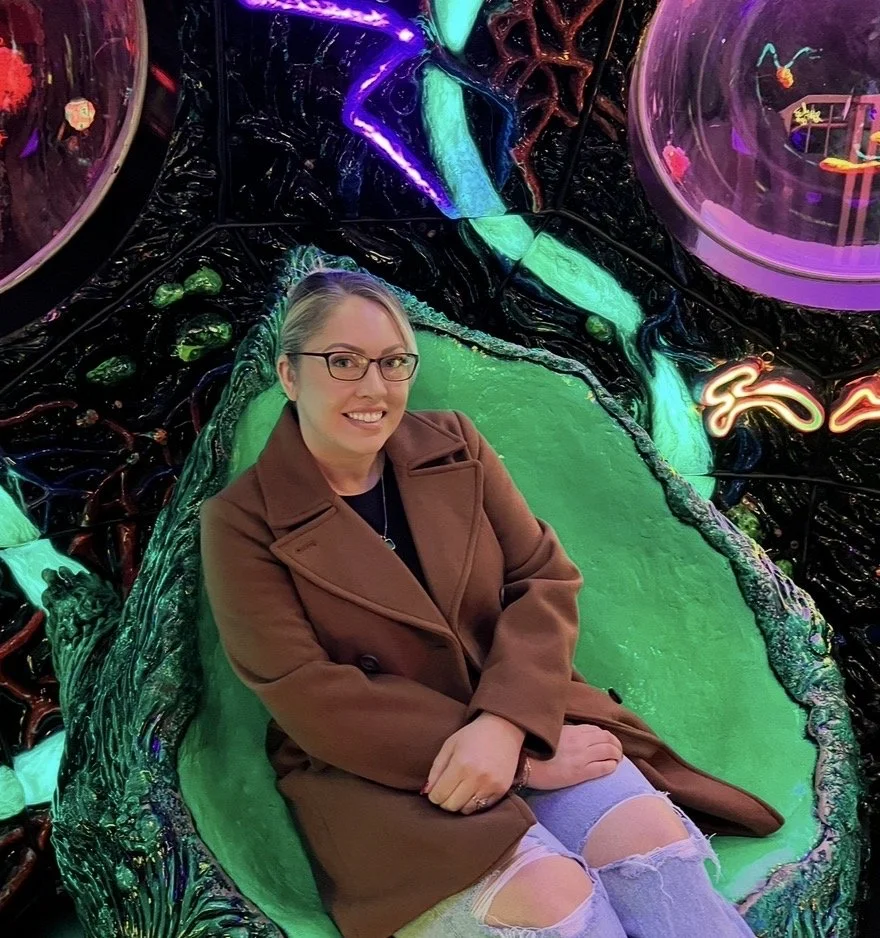
I'm calm. I'm direct. I'm not going to make you feel judged for who you are or how your brain works. I will also probably make you laugh at least once, because that matters too.
Growth Is Not Linear, and That Is Okay
One of the things I say to clients a lot is that growth doesn't look the same for everyone, and it doesn't move in a straight line. There will be hard weeks. There will be weeks where it feels like you're going backward. That isn't failure. That's the actual process.
What I hope for every person I work with is that they leave with a better understanding of themselves, more compassion for the parts of them they've been fighting, and some real tools for navigating life, not perfectly, but more honestly.
You're not too much. You're not broken.
You are, most likely, someone who has been trying really hard in conditions that were not set up for you to thrive.
That's something we can work with.
If you are ready to start, reach out. I would love to connect.
Frequently Asked Questions
Ready to start? I would love to connect.
Reach out to Ala Therapy Collectivetherapy for an expansive life

Taylor Hendricks, LMSW is a therapist based in Oklahoma, working toward her LCSW under supervision. She specializes in anxiety, depression, and neurodivergent and LGBTQIA+ affirming care. She is also a Sci-Fi nerd, a gamer, an anime fan, and a lifelong storm watcher who once wanted to be a meteorologist. Taylor brings all of that, the clinical training and the lived experience, into her work every single day.