
AuDHD Therapy · Online Across Oklahoma
Neither room was built for you.
Therapy for AuDHD, where autism and ADHD land in the same nervous system and pull it in opposite directions. For adults and teens across Oklahoma who have never fit cleanly into either box and got told that meant neither one applied.
Belonging Nowhere in Particular
You fit in both places and neither one.
Taylor Hendricks says it to people constantly, because people keep arriving having never heard it out loud: you fit into ADHD spaces sometimes, and autism spaces other times, and never completely belong in either.
In the ADHD room everyone is loud and fast and interrupting each other affectionately and you want to go home. In the autism room everyone is talking about routines and sameness and you are thinking about how your routines fall apart every eleven days for no reason you can name.
So you decide you must be faking one of them. Usually whichever one you got diagnosed with last. And then you go back to running a life on advice that was built for half of you.
You are not inconsistent. You are two things at once, and they want opposite things.
The Pull
Both are true. That is the whole problem.
Most people who arrive here can describe the contradiction long before they have a word for it. It is not indecision and it is not self-sabotage. It is two operating systems making reasonable demands of one body, at the same time, about the same thing.
| One half needs | The other half needs |
|---|---|
| Novelty, or the whole day flatlines | Sameness, or the whole day comes apart |
| To start six things tonight | To not have anything change without warning |
| Noise, movement, stimulation, input | Silence, and the lights off, and nobody talking |
| To improvise and see what happens | To know the plan, in order, in advance |
| To talk to somebody, right now | To not be perceived for at least a day |
| The interest, urgently, entirely, at 2am | Rest, food, and a bedtime that holds |
Both columns are you. Both are legitimate. Neither one is the real you underneath the other one, which is the thing people keep trying to figure out on your behalf.
Why the Advice Keeps Failing
Every strategy works. For half of you.
This is the part that makes people think they are the problem. They are not. The advice is aimed at one condition and they have two.
ADHD strategy says add novelty. Gamify it, change the environment, work in a coffee shop, put a timer on it, make it a race. Reasonable. It also floods a sensory system that was already at capacity, and by Thursday you are in shutdown and cannot explain why the thing that was working stopped.
Autism strategy says reduce input. Same routine, same food, quiet room, predictable week, protect the schedule. Also reasonable. Also, by week three, you are so understimulated that your brain starts dismantling the routine out of sheer boredom and you call that a personal failing.
Then you go back to the first one. That loop is not you failing at maintenance. It is what happens when you follow correct advice written for a person who is half of you.
The work here starts by naming the pull instead of picking a side, and then figuring out what your actual life can hold. Not a protocol. Not a productivity system. Something built for a person who needs the lights off and needs something new to happen, both, today.
Why Nobody Caught It
Until 2013, the manual would not let them.
This is not a metaphor. Under the DSM-IV, the diagnostic manual in use until 2013, if your inattention and hyperactivity occurred exclusively during the course of a pervasive developmental disorder, a clinician was not permitted to also diagnose ADHD. Not discouraged. Not left to judgment. Not allowed.
The American Psychiatric Association removed that exclusion in the DSM-5. Their own summary of what changed lists it plainly, right in the ADHD section: a comorbid diagnosis with autism spectrum disorder is now allowed.
Which means a whole generation of people were assessed by clinicians who were doing exactly what the book told them, and the book was wrong. If you were a kid before 2013, you got one label and half the support, and then you spent the next decade wondering why the label never quite covered it.
The other half of the answer is that the two conditions hide each other. The impulsivity papers over the rigidity. The structure papers over the chaos. You present as not quite either, and you get told you are not quite either, and you leave with nothing. Add a lifetime of masking on top of that and there is very little left on the surface for anyone to catch.
That falls hardest on women. Women are diagnosed with ADHD about five years later than men despite symptoms starting at the same age, and for autism they are diagnosed about three years later, with the gap not closing until somewhere around age 20. Two conditions, both late, both in the same person. Then consider that in 2024 a researcher publishing the first study of what an adult AuDHD diagnosis is actually like for women had to open by noting that no such research existed. Not thin research. None.
So if you have spent years feeling like nobody had a name for what was happening to you, that was not a failure of your explaining. Until very recently the field had not gotten around to asking.
What Actually Comes Up
The stuff that only happens when it is both.
- Routines you need and cannot keep
- Craving stimulation and being wrecked by it, same day
- Hyperfocus that overrides sensory limits until you crash
- Autistic burnout with an ADHD engine still revving underneath
- Sensory overload you did not notice until it was already too late
- Executive dysfunction plus rigidity, working against each other
- Rejection sensitivity in a person who also misreads the room
- Social exhaustion and loneliness at the same time
- Being told you are too much and too rigid by the same person
- A diagnosis that only ever explained half of it
If one of the two is doing most of the work in your life, start there instead. ADHD and neurodivergent therapy or autism therapy. There is no wrong door and nobody is going to make you prove which one you are.
Anxiety and depression, trauma, OCD, and chronic illness ride along with this constantly. They get worked on here too, not booked separately.
The Clinicians
Two people, both currently accepting.

Taylor Hendricks, LMSW
Licensed Master Social Worker · Oklahoma
- AuDHD
- Autism
- ADHD
- OCD
- Walk and Talk
The line at the top of this page is Taylor's, and she says it a lot, because most people have spent years assuming the not-quite-fitting was evidence against them rather than the actual diagnosis.
Works with the ones who got called gifted and lazy in the same breath. CBT for the concrete tools, with DBT, ACT, and trauma-informed work pulled in depending on what is in front of her. Also runs Neurodivergent IRL, an outdoor walk-and-talk in the Tulsa area, which takes care of the sitting still and the eye contact without either one having to be discussed. Evenings Monday through Wednesday and Sundays during the day.
She has written about her own late diagnosis, the masking that came years before it, and what she was actually looking for the whole time: Searching for Belonging.
Read more about Taylor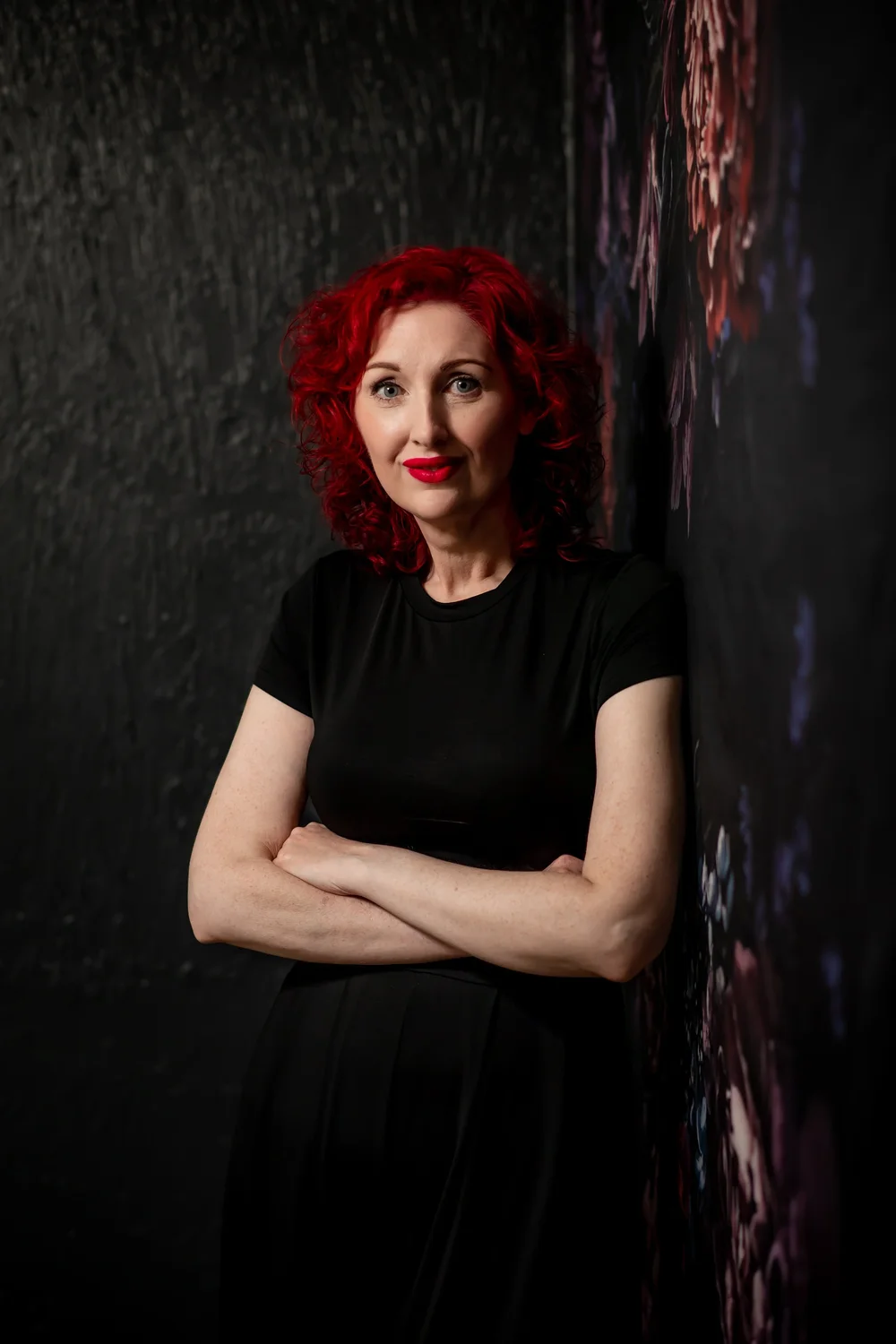
Michi Medley, LMSW, A-CAS
Advanced Certified Autism Specialist · IBCCES
- AuDHD
- Autism
- Teens
- Families
- LGBTQIA+
The A-CAS credential comes through IBCCES and includes trauma-informed ABA training. Michi studied ABA and autism before moving into social work, and is a parent of a child with autism, so whatever you are bracing to explain has decent odds of having already happened in her house.
Works with teens, with parents and caregivers, and often with the two of them in the room at once. Useful here specifically, because a teenager who needs structure and destroys it in the same week gets read as defiant long before anyone asks what is actually happening.
Read more about MichiInsurance and Fees
You will know the number before you book.
Ala Therapy Collective is in network with many major Oklahoma plans. Send your member ID through the contact form and Jessie verifies your benefits and tells you what each session costs before you commit to anything. Most people owe a co-pay. Self-pay and a sliding scale are available.
Ala Therapy Collective does not accept Medicaid, including any carrier's Medicaid product or SoonerCare. If that is your plan, reach out anyway and we will point you toward in-network options.
Find your carrier:
Questions People Actually Ask
Straight answers.
What is AuDHD?
It is the informal name for having autism and ADHD at the same time. It is not a separate diagnosis and you will not find it in the DSM. It is a word people started using because they needed one, and because the experience of having both is not the same as having either, or as having them politely stacked on top of each other. The two pull against each other, and that pull is its own thing.
Do I need both diagnoses to come here?
No. Plenty of people arrive with one, or with neither, or with a report from years ago that only named half of it. Suspecting it is enough. Nobody is going to ask you to prove it before you can talk about it.
Why did nobody catch this when I was a kid?
Partly because until 2013 the DSM-IV did not permit it. If your inattention and hyperactivity occurred exclusively during the course of a pervasive developmental disorder, a clinician could not also diagnose ADHD. The American Psychiatric Association removed that exclusion in the DSM-5. The other part is that the two conditions mask each other, so people with both often present as not quite either and get sent home with nothing. If you also learned to mask early, there was very little left on the surface for anyone to catch.
Why does nothing I try ever work for long?
Because it was designed for one of the two. Add novelty and the sensory system floods. Reduce input and the boredom dismantles the routine. Both pieces of advice are correct for the condition they were written for, and you have two. The work here is not picking a side, it is figuring out what a life can hold when both halves are making real demands.
Should I be on the ADHD page or the autism page instead?
If one of them is doing most of the work in your life, yes, start there. ADHD and neurodivergent therapy or autism therapy. If the answer is honestly both, or if you have been ping-ponging between the two for years, you are already in the right place. There is no wrong door here.
Do you work with teens?
Yes. Taylor Hendricks and Michi Medley both do, and Michi works with parents and caregivers as well, sometimes alongside the teen. A teenager who needs structure and dismantles it in the same week often gets read as defiant, so it is worth having someone in the room who has seen it before.
Does insurance cover this?
Most major plans cover outpatient therapy. Send your member ID through the contact form and we verify your specific benefits before your first appointment, so you know what you owe without calling anyone. Ala Therapy Collective does not accept Medicaid or SoonerCare.
Are sessions online?
Yes, online across Oklahoma. Taylor also offers outdoor walk-and-talk sessions in the Tulsa area through Neurodivergent IRL, which handles the sitting-still problem and the eye-contact problem at the same time.
When You Are Ready
You do not have to pick a side to start.
Fill out the contact form and tell us what is going on, in whatever order it comes out. Jessie handles the insurance part. You pick who you talk to.