
You should not have to explain the half of it.
Affirming therapy for Black and African American adults, online across Oklahoma and in person in Oklahoma City.
Most therapy starts with you explaining yourself. This does not.
You know the version of therapy where you spend the first few sessions explaining things a provider should already understand. Choosing your words so they land right. Softening what happened so it does not get brushed off. Wondering whether what you feel will be taken seriously or quietly filed as something else. That is exhausting, and it is the opposite of care.
Here you get to skip that part. The code switching. The family expectations. The church you may or may not still go to. The doctor who talks to you differently. The fact that you have been the only one in the room since you were nine. None of it needs a preamble. We start where you actually are.
There is a difference between being tolerated and being understood.
Not a slogan. A way of working.
Anyone can put the word affirming on a website. It only means something if it changes what happens once the session starts. So here is what it changes.
- We believe you the first time. If you say something felt racist, we are not going to walk you back through it to check whether it really was.
- Your identity is context, not a diagnosis. We are not going to pathologize the way you learned to cope in a world that made coping necessary.
- Race can be the whole conversation or none of it. That is your call, session by session, and you are allowed to change your mind.
- We name what is actually happening. Some of what is wearing you down is not a thought distortion. It is a real condition you are living in, and pretending otherwise is not therapy.
- We do our own homework. Our clinicians stay in training and consultation so that educating your therapist never becomes one more job on your list.
The things you carry, named plainly.
The weight that has no name yet
- Racial stress and the exhaustion of constant adapting
- Being the only one in the room, over and over
- Family expectations and the role you got assigned at eight years old
- The burnout a vacation does not touch
- The kind of tired that sleep does not fix
The things that do have names
- Anxiety and depression
- Trauma, including the trauma nobody wrote down
- Grief and loss, including losses other people minimized
- Self esteem, identity, and who you are underneath everyone's expectations
- Relationships and the weight of being the strong one
- Life transitions
There is no box for it on the form.
Researchers have a name for what steady, repeated racism does to a person. Race based traumatic stress. Robert Carter defined it in 2007 and built a validated measure for it in 2013, and the research describes seven clusters of symptoms it produces: depression, intrusion, anger, hypervigilance, physical symptoms, low self esteem, and avoidance.
Read that list again. If you found yourself somewhere in it, you are not being dramatic and you are not imagining things. You are describing something that has been measured in African American adults, repeatedly, by people whose job is measuring it.
In a study of veterans, exposure to race related stress accounted for an additional twenty percent of the variance in PTSD symptoms, on top of combat exposure and military rank. Combat was not the only thing doing damage. Loo and colleagues, 2001
Now the part that explains a lot. The DSM is the manual every therapist in this country diagnoses out of. Its criteria for PTSD cover exposure to death, serious injury, and sexual violence. Racial discrimination is not on that list. So the injury is real, the symptoms are documented and measurable, and the paperwork still has nowhere to put them.
That is a problem with the form. It is not a problem with you. Here it gets named out loud and worked with directly, which is what should have happened the first time.
The people behind this work.
Two people, named, with their faces on the page. You should know who you are talking to before you decide to talk. The rest of the practice is in the Aviary.
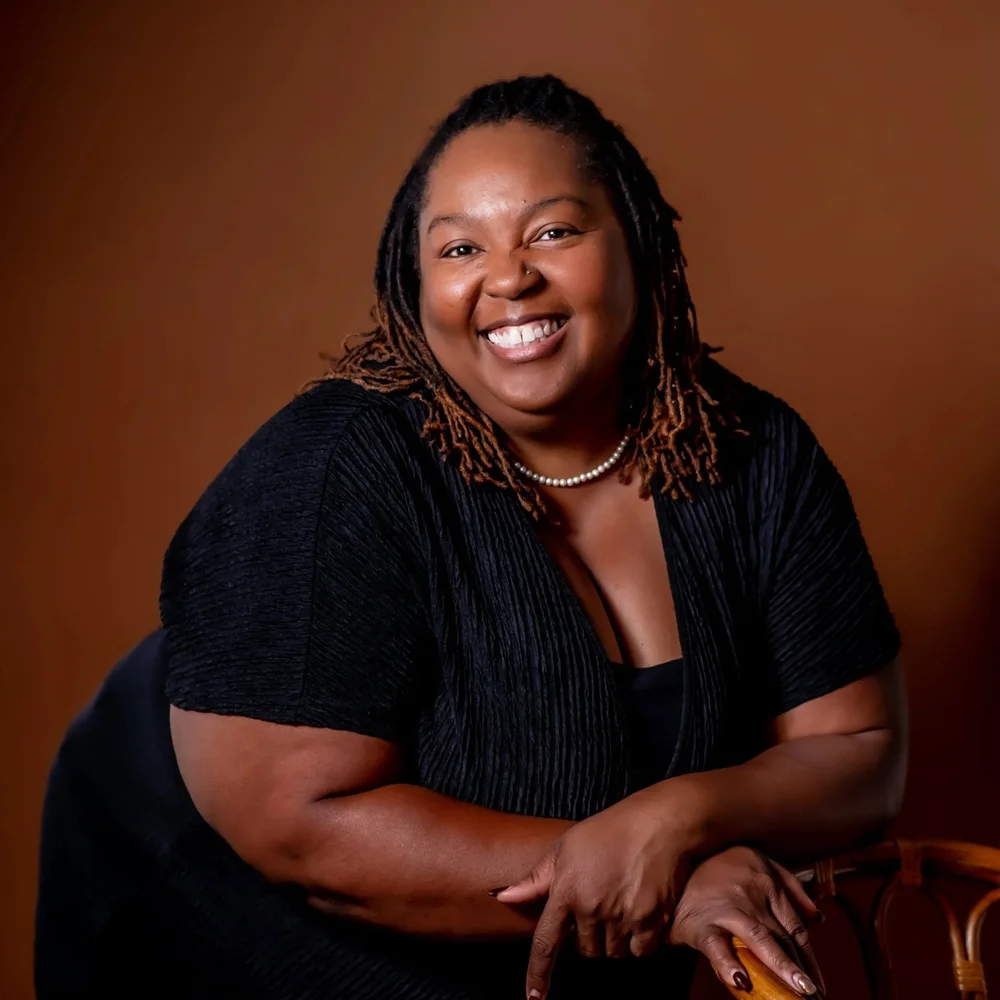
Accepting new clients, in person in Oklahoma City and online across Oklahoma. In network with several major plans.
View Profile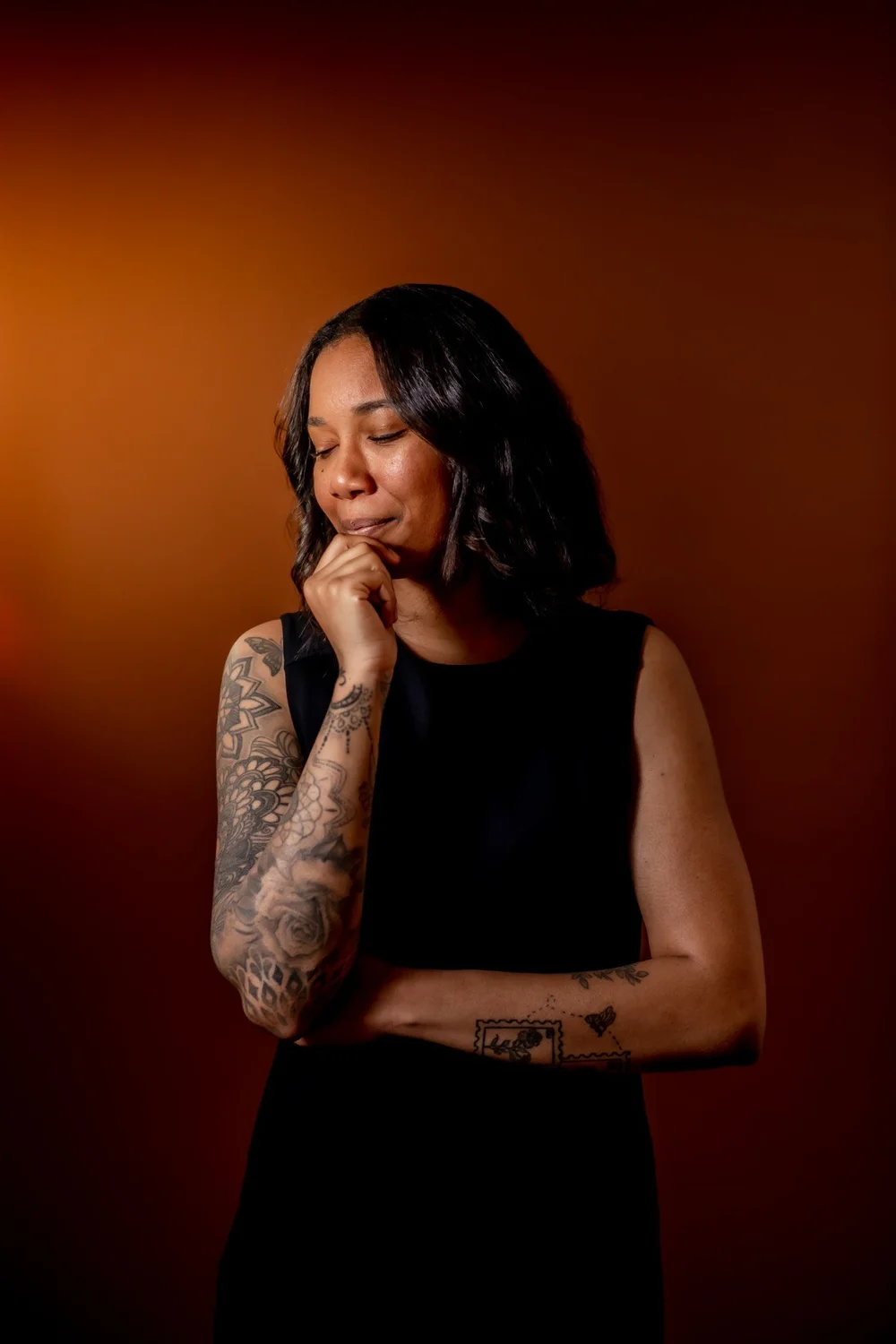
Not taking new clients during her sabbatical.
Strong is a job. It is not a personality.
There is a real body of research on this, and it does not say what people assume it says.
For Black and African American women, researchers study something called the Strong Black Woman schema and break it into five parts: resistance to vulnerability, the obligation to show strength, suppression of emotion, caregiving for everyone else, and striving for success on fewer resources than the work actually requires. A systematic review found the schema cuts both ways. It works as a genuine asset for confidence, for resilience, for getting through what has already happened. In the same literature it is tied to higher anxiety, higher depression, and waiting longer to ask for help.
One study went looking for the mechanism and found self silencing sitting in the middle of it. The obligation to show strength runs through self silencing, and that is the path it takes to the depressive symptoms. It is not the strength doing the damage. It is having nowhere to set it down.
The parallel construct is John Henryism, named for the folk figure who beat the steam drill and died doing it. Sherman James defined it as persistent, high effort, active coping with stress that will not let up. The findings there are genuinely mixed and worth saying honestly: high effort coping is often associated with fewer depressive symptoms, and at the same time with a heavier physiological load on the body, and the physical bill is steeper for people working with fewer resources. Trying harder works. It also charges you for it.
Nobody here is going to ask you to stop being strong. That was never the assignment. The assignment is finding somewhere to put it down.
If this is the part that landed, our page on therapy for women sits next to this one, and anxiety and depression covers what the wearing down turns into.
The hesitation is not irrational.
In 2024, Black and African American adults were thirty six percent less likely than adults nationally to have received any mental health treatment in the past year. That gap usually gets explained as stigma, as though the whole problem is that Black families will not talk about feelings. That explanation is lazy, and it puts the fault in the wrong place.
Try this one instead. Schizophrenia is what clinicians call a diagnosis of exclusion, meaning everything else has to be ruled out first, mood disorders included. A Rutgers study looking at more than sixteen hundred people found that clinicians did not properly weigh mood symptoms when assessing African Americans, and overdiagnosed schizophrenia as a result. Not a fringe finding. It has been replicated for decades. The American Psychiatric Association's own 2021 resource document on anti Black racism describes the overdiagnosis of psychotic disorders in Black populations as one of the most well documented inequities in the field. The current DSM says plainly that the misdiagnosis comes from clinician bias.
So if you have watched this system get someone in your family wrong, your caution is not a symptom. It is a memory, and it is accurate. Bring it in here and test us against it. That is a reasonable thing to do and nobody is going to take it personally.
In the room only if you want it there.
Faith is rarely a simple thing. Maybe the church raised you and still holds you together. Maybe it raised you and then it hurt you. Maybe you left and your mother still asks about it every Sunday. Maybe you never went at all and got treated like something was wrong with you for that.
All of it is welcome here and none of it is required. If your faith is what keeps you standing, it belongs in the room and we will work with it as the strength it is. If your faith is where the injury happened, we will work with that too, including the grief that comes with leaving something that used to feel like home. Demetria works with spiritual exploration and faith transitions specifically. You set the terms, and you can move them.
If religious trauma is the thing that brought you here, our religious trauma page goes deeper.
Sometimes the work is not just yours.
Demetria sees couples and committed partners who want to feel like a team again, talk without it turning into a fight, and rebuild trust and closeness. Affirming care here makes room for every kind of relationship and family, including non-monogamous and polyamorous partnerships, no explaining required.
If couples work is what brought you here, our couples therapy page goes deeper.
The first one is lower stakes than you think.
- You reach out. Use the contact form and tell us your plan and roughly what you are looking for. You do not need a diagnosis, a tidy summary, or the right words. Not having the words is a normal reason to come.
- We check your benefits before you book. You get the number before you owe the number. If you are paying out of pocket, you get that number too, in advance.
- You get matched and scheduled. If the fit is wrong, say so. Switching therapists is a normal thing that happens and nobody's feelings get hurt over it.
- First session, you talk and your therapist listens and asks. Nobody is going to make you tell the worst story on day one. You set the pace. That is not a courtesy, it is how the work actually functions. There is a fuller walk-through on what to expect in therapy.
Care you can actually get to.
Using your insurance
Demetria is in network with Aetna, Ambetter, Blue Cross Blue Shield, and Cigna, among other plans. Tell us your plan when you reach out and we will check your benefits before your first session, so you know what is covered up front.
Paying out of pocket
If you are not using insurance, self-pay is available and Demetria offers a sliding scale. Rates are shared before you book, never after. If you have out of network benefits, we can give you a superbill to file.
Ala Therapy Collective does not accept Medicaid, including any carrier's Medicaid product or SoonerCare. If that is your plan, reach out anyway and we will point you toward in-network options.
Ready to confirm coverage? Start on our contact form and we will take it from there. You can also read more on our insurance page.
Please note: insurance benefit quotes are estimates from your insurance provider and are not a guarantee of coverage. Final responsibility for payment depends on how your insurance processes the actual claim for each date of service.
Before you reach out.
No. This page is built for Black and African American clients who want a therapist they do not have to brief first, and who will not need the background explained twice. Anyone is welcome to reach out.
It means your therapist understands the context you live in without you having to spell it out, takes your concerns seriously the first time, and does not treat your identity as a side note. It shapes how we listen and how we work, not just what we say on a page.
Most of it is. Sessions are online across Oklahoma, so you can meet from wherever you feel most comfortable. Demetria also sees clients in person in Oklahoma City if that is what you want.
Demetria is in network with Aetna, Ambetter, Blue Cross Blue Shield, and Cigna, among other plans. Reach out with your plan details and we will tell you what is covered before you book. Self-pay and a sliding scale are also available. Ala Therapy Collective does not accept Medicaid, including any carrier's Medicaid product or SoonerCare.
Demetria is. She describes herself as a Black woman, a social worker, and a therapist, and she brings all of it into the room. Katana is Afro Latina and is on sabbatical right now. The rest of Ala Therapy Collective is not Black, and we are not going to pretend otherwise on a page like this one.
No. Some people want it at the center of the work. Some people want one hour a week where it is not the subject. Both of those are the work, and you can switch between them without explaining yourself.
Bring it. That belief usually came from somewhere real, often from people who had good reason not to trust institutions with their business. It is worth understanding rather than arguing with. Plenty of people start therapy without telling their family, and that is a legitimate way to start.
That is common, and it is welcome. You do not need the right words or a clear problem statement. You just need to start, and we will help you find your footing.
Reach out through our contact form. We will get back to you and set up a time to talk.
Reviewed by Shylah Ridgway, LCSW, LICSW, founder and clinical director of Ala Therapy Collective. Updated September 2026.
Where we reach.
People come to this page looking for a Black therapist, an African American therapist, a Black female therapist, culturally responsive care, or a counselor who works with Black mental health without needing the context explained. Those all land in the same place, because they are the same ask.
Sessions are online across the whole state, with in person available in Oklahoma City. That covers OKC and the surrounding metro, plus Tulsa, Norman, Edmond, Lawton, Enid, Broken Arrow, Moore, Yukon, Mustang, Stillwater, Muskogee, and the towns where a therapist who already knows the context is not a short drive away. Your zip code does not get to decide the quality of your care.
Where the research on this page comes from
Treatment gap figure: U.S. Department of Health and Human Services, Office of Minority Health, Mental Health and Black/African Americans, using 2024 data. Race based traumatic stress: Carter, 2007, and the Race Based Traumatic Stress Symptom Scale, Carter and colleagues, 2013. Race related stress and PTSD in veterans: Loo and colleagues, 2001. Schizophrenia misdiagnosis: Gara and colleagues, Rutgers, 2019, and the American Psychiatric Association Resource Document on Anti Black Racism, 2021. Strong Black Woman schema: Castelin and White, 2022; Jones and colleagues, 2025; the 2018 Sex Roles study identifying self silencing as the mediating pathway; and the systematic review that defines the schema's five facets. John Henryism: James, 1994, and Robinson and Thomas Tobin, 2021.
- Therapy for Black Women
- Therapy for Black Men
- Couples Therapy
- ENM Therapy
- Anxiety and Depression
- Trauma Therapy
- Religious Trauma
- Growing Up in Dysfunction
- Therapy for Women
- LGBTQIA+ Affirming Therapy
- Online Therapy in Oklahoma
- What to Expect
- Insurance and Self-Pay
- Demetria Bonds, LMSW
- The Ala Aviary
Looking for something more specific? We also have pages for Black men and Black women.
If you already know what you are working on, start with couples therapy, trauma therapy, or LGBTQIA+ affirming therapy.
Come as you already are.
You have spent enough energy being understood by people who had to work at it. Here you get to put that down. When you are ready, we are ready.