
Growing Up In Dysfunction
Every kid in a house like that gets handed a job.
You are still working it.
Therapy for adult children of dysfunctional families in Oklahoma
You did not apply for the job. You read what the family needed and you became it, because being good, or invisible, or funny, or in charge was how you stayed safe.
The adults we work with grew up in homes shaped by all kinds of it: addiction and alcoholism, emotional neglect, untreated mental illness, chronic conflict, parentification, religious trauma, or a parent who never quite grew up themselves. Some would call themselves adult children of dysfunctional families. Whatever fits, the cost is real.
Maybe addiction was part of it. Maybe untreated mental illness. Maybe nobody was drinking and everyone was still walking on eggshells. Whatever was happening, you found a role that kept you steady, and you got good at it.
You learned to read it early. You could tell the whole night from the way the front door opened, the footsteps in the hall, how the keys hit the counter, how fast they were walking. You knew what kind of evening it was going to be before anyone said a word.
The trouble is the role never clocked out. The house is long gone and you are still playing the part, in your relationships, your work, and the way you treat yourself. Therapy is where you get to set it down.
Find the one you played
Most families in trouble hand out the same few jobs. See which one fits, and notice what it is still costing you.
You were the one who made the family look fine.
Being impressive kept the attention off the chaos, and being good earned the approval that never came for free.
Your worth is welded to what you produce. Rest feels like failure and slowing down feels unsafe.
You were the one who took care of everybody else.
Taking care of everybody kept the house upright, and being needed was the closest thing to being wanted.
You go last without noticing you decided to, rest feels selfish, and you are worn out by people who never think to ask how you are.
You were the one who got blamed for it.
Being the problem gave everyone else somewhere to put their pain, and at least that attention was honest.
You brace to be blamed, expect to be the bad one, and have a hard time believing you are actually wanted.
You were the one who stayed out of the way.
Disappearing kept you safe and made you one less thing for an overwhelmed house to manage.
You do not know how to take up space or ask for what you need, and you feel unseen even when you want to be found.
You were the one who kept it light.
A joke at the right moment broke the tension and kept the room from boiling over.
You deflect with humor, struggle to be serious about your own pain, and worry nobody knows the version of you that is not performing.
You were the one who kept the peace.
Reading the room and smoothing things over before they blew up kept everyone calm and you safe.
You avoid conflict at any cost, manage everyone's feelings, and lose track of your own.
The role does not end when childhood does. It just changes costumes. The hero keeps rescuing. The caretaker keeps going last. The peacemaker keeps swallowing it whole. The job stays the same, until you decide it does not have to.
You were never the role. You were the kid who had to play it.
Family dysfunction takes many forms
It does not have to look dramatic to leave a mark. Sometimes it was loud. Sometimes it was a house where everyone was technically fine and nobody was okay.
- Addiction or alcoholism in the home
- A parent with untreated mental illness
- Childhood emotional neglect
- Parentification, becoming the caretaker before you were old enough to be one
- Constant conflict, or a silence you did not dare break
- Chronic criticism, where nothing you did was quite enough
- Domestic violence
- Religious trauma
- Family secrets
- Unpredictability, where the rules changed with the mood in the room
- Emotional immaturity, where you ended up being the steady one
Some people grew up with emotionally immature parents: caregivers who could not handle their own feelings, so you learned to manage yours alone. Some would call it being the adult child of an alcoholic, or an adult child of addiction. Some grew up with a parent who had an untreated mental illness, or with the quieter harm therapists call childhood emotional neglect. Some would not use any of these words and would just say they are tired. All of it belongs here.
For a lot of people the high control family and the high control church were the same building with different parking. If that is your story, start with religious trauma therapy in Oklahoma.
Not everyone who grew up in dysfunction would call themselves traumatized. Plenty just call themselves exhausted.
What often comes with it
Growing up in dysfunction rarely shows up by itself. A lot of the people we see are also carrying:
- OCD, anxiety, and depression
- The long shadow of trauma
- Chronic illness, and the work of managing a body and a history at the same time
- Neurodivergence, ADHD, and autism
- Caregiver burnout, often from caring for the same people who could not care for you
- Relationship patterns that keep repeating
- Family rejection around being LGBTQIA+
- Religious trauma
These things feed each other. We work with the whole picture, not one slice of it.
You might recognize yourself here
Dysfunctional family dynamics tend to follow people into adulthood in ways that do not look connected at first. You might:
- Feel responsible for everyone around you
- Struggle to relax when nothing is wrong
- Jump up to look busy the moment someone walks in, because sitting still feels like getting caught being lazy
- Apologize constantly
- Feel guilty setting the smallest boundary
- Become the caretaker in every relationship
- Avoid conflict at all costs
- Feel uncomfortable asking for help
- Second-guess your own decisions
- Overfunction while quietly feeling overwhelmed
- Feel responsible for everyone else's feelings
- Be hyperindependent, and a little proud of it
A lot of people spend years trying to fix these patterns without realizing they were survival skills first.
The people who get it
This page is Michi's home turf. Two more of us at Ala Therapy Collective work it alongside her, and the rest of the flock is in the Aviary. Michi and Madison see clients online across Oklahoma. Taylor sees clients outdoors around Tulsa through Neurodivergent IRL and online statewide.
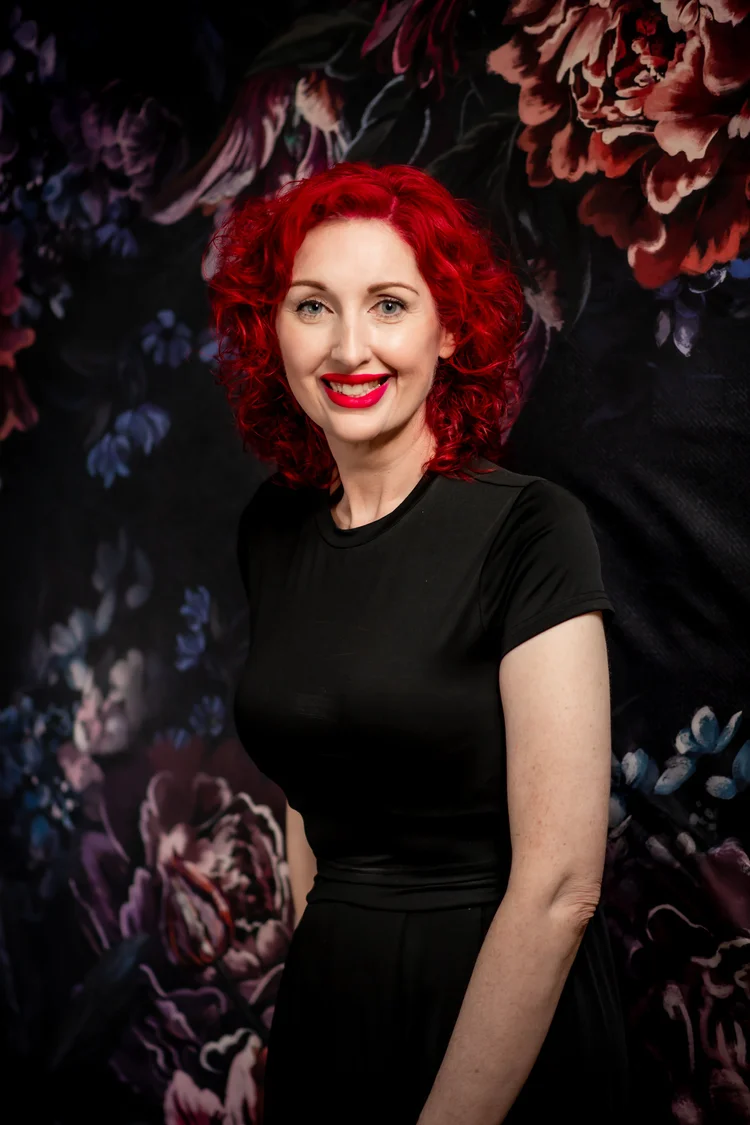
Knows that the kid who held everyone together usually never got held.
Michi works with adults untangling the long shadow of a chaotic or addicted household, parentification, and caregiver burnout. She also treats OCD. Online across Oklahoma, with evening and weekend appointments available.

Helps you decide what to keep from how you were raised, and who has actually earned a place in your life.
Madison works with adults sorting out what to carry forward from the family they grew up in and what to set down, rebuilding self-worth and boundaries along the way. Her approach is person-centered, strength-based, and unapologetically you. Accepting new clients online across Oklahoma.
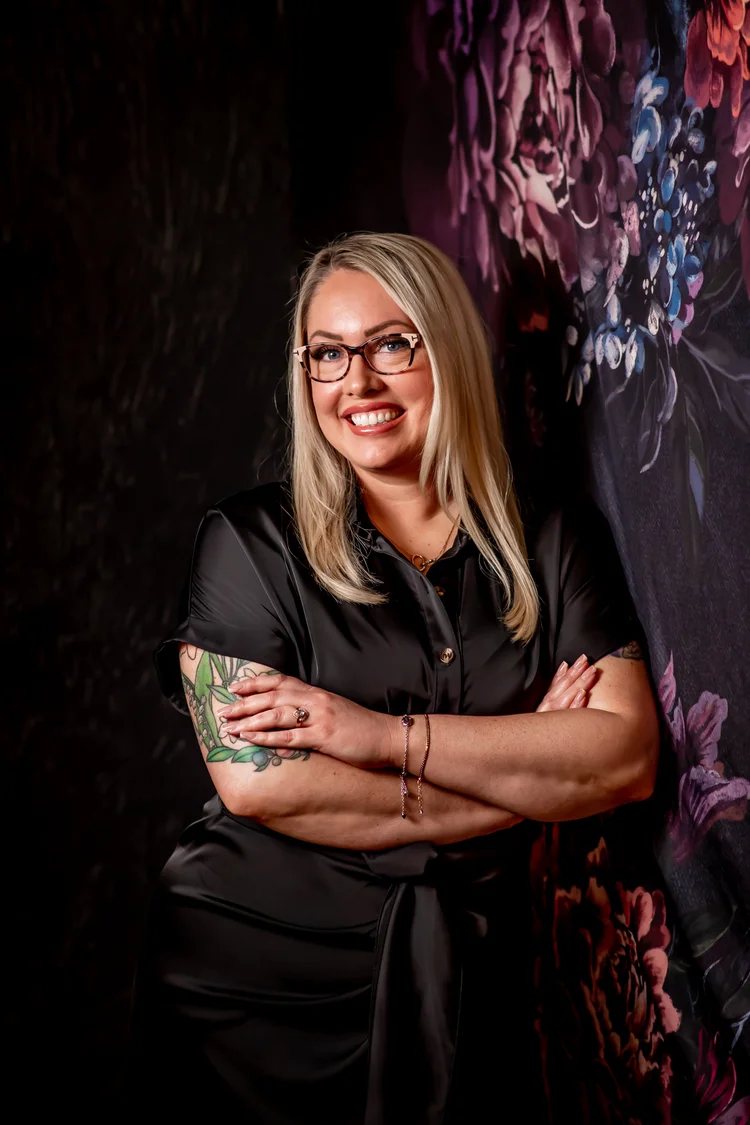
Gets how a neurodivergent brain and the family you came from shape each other.
Taylor works with adults at the meeting point of neurodivergence, identity, and the patterns they grew up with, through a neurodivergent-affirming and LGBTQIA+ affirming lens. She also treats OCD, anxiety, and depression. In person on trails and in parks around the Tulsa metro, and online across Oklahoma. Evening and Sunday appointments available.
We sort out the coverage so you do not have to
You already spend enough energy managing things. Ala Therapy Collective is in network with many major plans. Because coverage details vary plan to plan, we verify your benefits before your first session and tell you what we find, so you start from a clear picture instead of a guess.
You can see the full list of plans on our insurance page, and self-pay is available if you are out of network.
Ala Therapy Collective does not accept Medicaid, including any carrier's Medicaid product or SoonerCare. If that is your plan, reach out anyway and we will point you toward in-network options.
Growing up in dysfunction, answered
Is it me, or was it my family?
This is the question almost everyone walks in with, and the fact that you are asking it says a lot. Kids in chaotic homes get taught, out loud or not, that they are the problem, because that was the easiest thing for everyone else to believe. You are not crazy and you were not too much. You grew up somewhere that ran on rules nobody admitted to, and you adapted. We help you sort out what was actually yours and what got handed to you.
What even counts as a dysfunctional family?
A lower bar than most people think. It does not require addiction or violence, though it can include both. A family can do real damage through emotional neglect, a parent who could not manage their own feelings, unpredictability, secrets, or a house where you learned not to need anything. If you grew up managing the room instead of just being a kid in it, that counts.
What if it was not that bad? Other people had it worse.
Someone always had it worse. That has never once made anyone's experience hurt less. You do not need a story bad enough to win an argument. If the way you grew up is still shaping how you work, how you love, and how you treat yourself, it belongs here.
Why do I not know what normal is?
Because nobody showed you. When the house you grew up in was your only reference, you end up guessing at things other people seem to just know, like how to rest, how to ask for help, or how much to give in a relationship before it tips over. That is not a flaw in you. It is a gap, and gaps can be filled.
Why do I keep ending up in the same kind of relationship?
Because familiar feels like home even when home was not safe. You learned early how to read certain people, earn a certain kind of love, and tolerate certain things, and that wiring does not shut off on its own. It shows up in who you pick and what you put up with. Naming the pattern is how you start choosing differently.
Do I have to cut my family off, or forgive them?
Neither is required here. Some people go no contact, some stay close, some land in between, and plenty are still deciding. This work is not about forcing a verdict on your family. It is about getting clear on what you want and building the footing to handle them on your own terms.
I am only realizing this in my thirties or forties. Is it too late?
Not even close, and you are right on time. It usually surfaces later, when you have your own kids, lose a parent, or finally feel safe enough to look back. Realizing it late does not mean you wasted years. It means you are finally steady enough to deal with it.
Can therapy actually change patterns this old?
Yes, even the ones that feel baked in. These patterns were learned, not stamped on you at birth, and what gets learned can be worked with. It is not about blaming your parents or reliving every bad day. It is about understanding why you do what you do and building something that fits the life you have now.
What is parentification?
Parentification is when a kid gets handed a job that was never theirs: managing a parent's moods, raising younger siblings, keeping the household upright, being the steady one. You grow up early and you grow up tired. In adulthood it usually shows up as overfunctioning, trouble resting, and feeling responsible for everyone but yourself.
What is an emotionally immature parent?
A parent who could not handle their own feelings, so handling them quietly became your job. They might have loved you in their way and still not shown up when you needed something real. You learned to read their moods, shrink your own needs, and keep the peace. The cost lands later, in how hard it is to know what you feel and ask for what you want.
What are the signs of childhood emotional neglect?
Childhood emotional neglect is less about what happened and more about what never did. Your feelings were not noticed, asked about, or made room for, so you learned they did not count for much. Common signs in adulthood: feeling empty or numb without knowing why, struggling to name what you feel, being hard on yourself, and feeling like a burden just for needing people.
Reviewed by Shylah Ridgway, LCSW, LICSW, founder and clinical director of Ala Therapy Collective. Updated September 2026.
The job is done. You are allowed to put it down.
You do not need the worst story. You do not need to be sure it counts. You just need to be tired enough of carrying it by yourself. One message is all it takes to start, and we take it from there. Here is what happens next.